
Back to Blog

    Crowdsourced Ad Platforms in 2026: Contest, Marketplace, Agency, or In-House?

    TD

    Tal Dahabani

    Founder & CEO

    Published
    Updated
    Reading time8 min
    Crowdsourced Ad Platforms in 2026: Contest, Marketplace, Agency, or In-House?

    "Crowdsourced advertising" now covers at least six genuinely different models, and they fail in different ways. This is the comparison page we wish existed when brands ask us what they should be using.

    The six models

    1. Design contest platforms. Mature, static-first. Excellent for logos, packaging, and display. Video offerings exist but are thin, because pre-AI video production economics never supported spec work.

    2. Freelancer marketplaces. You hire one person after browsing portfolios. You still buy a prediction — just a cheaper one, with more search cost on your side.

    3. UGC and creator networks. You brief creators who film real people with real products. Strong for authenticity-led categories; slower, physically constrained, and priced per creator.

    4. AI ad agencies. A studio with generative tooling. Faster than a classic agency, same structural limitation: a small number of concepts from a single point of view.

    5. In-house AI teams. Maximum control and lowest marginal cost, once you have hired and tooled up. High fixed cost, and creative variance is capped by the size of your team.

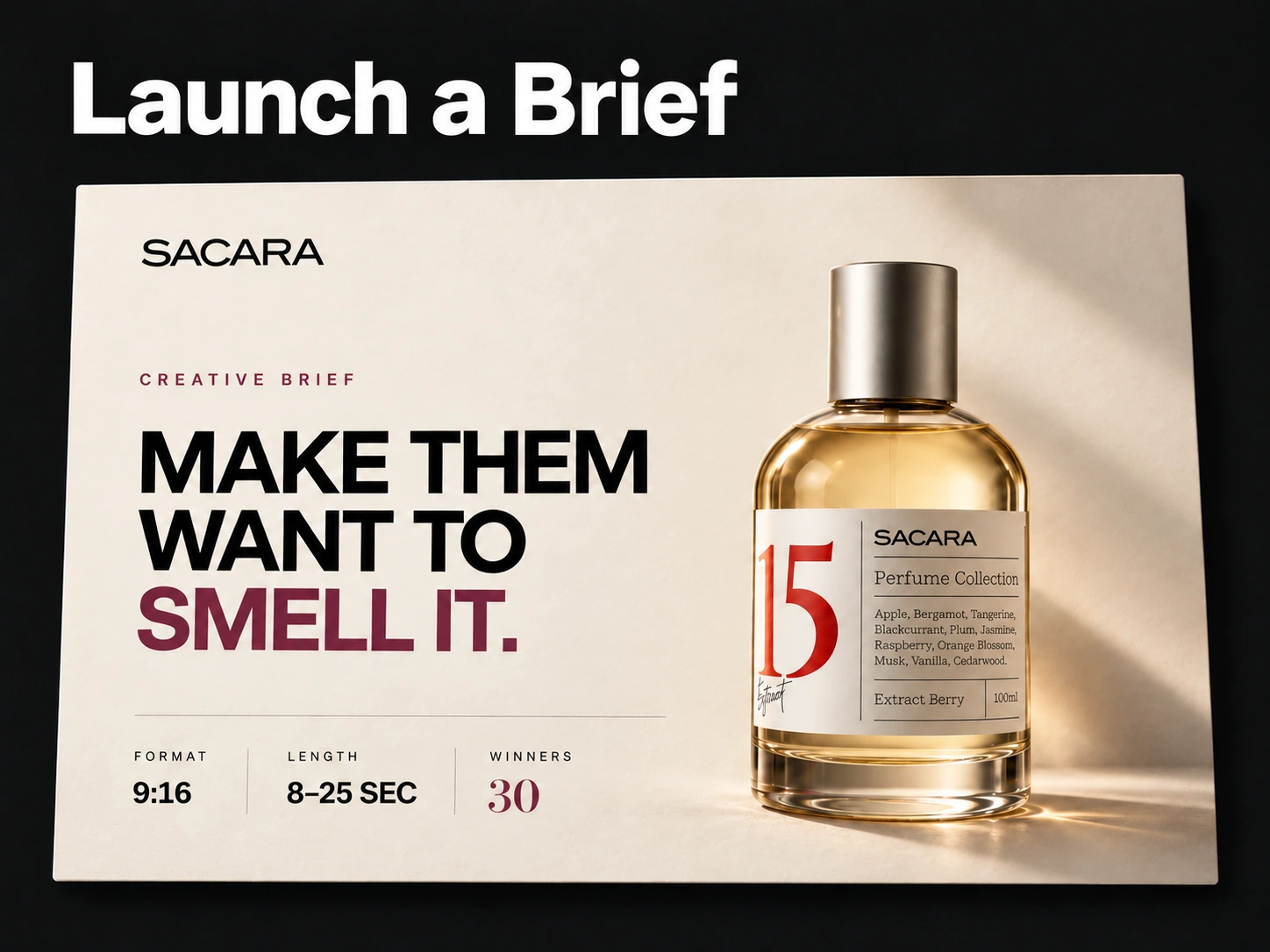
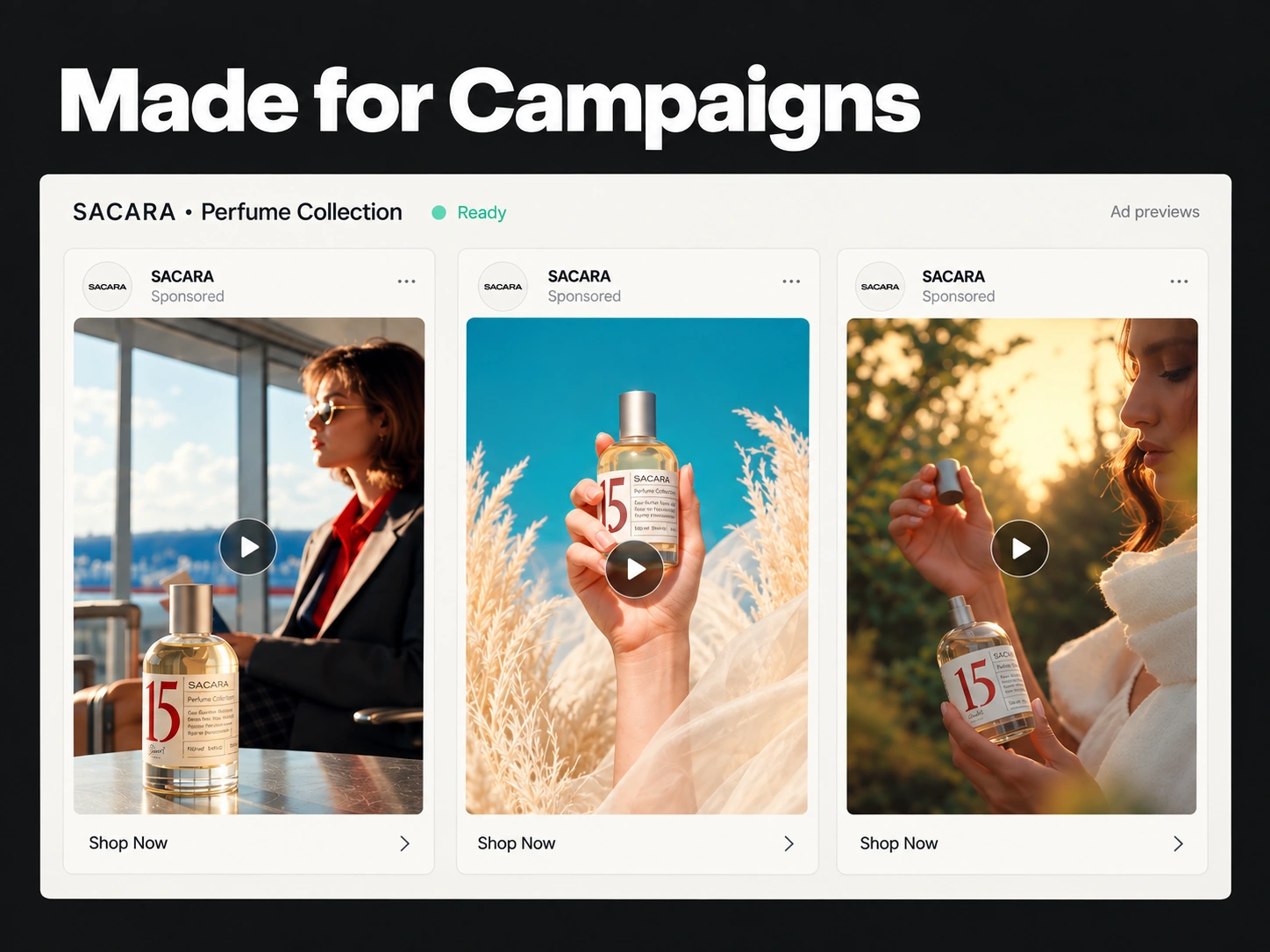
    6. Ad competitions. Brief in, dozens of finished ads back inside a fixed window, pay for winners, rights transfer on selection. This is what AdArena runs.

    Comparison matrix of sourcing models
    Comparison matrix of sourcing models

    Side by side

    ModelBest forTime to first finished adFinished options per briefRights
    Design contest platformStatic, brand identityDays20–100 (static)Transferred on award
    Freelancer marketplaceOne-off, well-specified jobsDays–weeks1–2Per contract
    UGC / creator networkAuthenticity-led, real-product demos1–3 weeks1 per creator bookedLicensed, often time-limited
    AI ad agencyTeams wanting managed service1–2 weeks1–3Per contract
    In-house AI teamHigh-volume, always-on creativeOngoingTeam-cappedOwned
    Ad competitionFinding the winning concept pre-spendDays (during open window)30–380+ by tierTransferred on winner selection

    The three questions that actually decide it

    How many finished options do you need to see before committing media budget? If the answer is one or two, an agency or freelancer is fine. If your category has high creative variance — apps, gaming, DTC, subscription — you need a distribution, and only competition produces one at a workable price.

    Who is doing the judging, and how? This is the most under-asked question. A platform that hands you 200 files and no ranking has moved the work to you. Look for structured head-to-head evaluation, not a folder.

    What happens to rights on the work you don''t pick? Contest and competition models transfer rights on winners. UGC licensing is often time-boxed and channel-limited. Read this before you build a campaign on assets you only rented.

    Pick this if…

    • Pick a competition if you have real media budget behind the winner, high creative variance in your category, and you need the best concept rather than a specific execution.
    • Pick UGC creators if authenticity with a real human and a real product is the point, and you can absorb a 1–3 week cycle.
    • Pick a freelancer if the job is fully specified and repeatable — cutdowns, localisation, resizing.
    • Pick an agency if you need integrated strategy, brand governance, and multi-channel management, and you are buying a relationship rather than an asset.
    • Pick in-house if your volume is high enough to amortise salaries, and you have accepted the variance ceiling.

    Most sophisticated teams end up combining two: competition to discover the winning concept, then in-house or freelance to iterate and localise it. That split is where the model is strongest — discovery is the expensive problem, and iteration is the cheap one.

    What has actually changed since 2024

    Cheap finished video is the only variable that matters. It converted spec work in video from irrational to routine, which in turn made contests viable in the one format where creative variance is most expensive. Everything else in this list existed before; only the sixth row is new.

    FAQ

    Is crowdsourcing ads risky for brand safety? It is manageable, not automatic. Require explicit compliance rules in the brief, gate brand-kit access behind signed declarations, and review winners before publication.

    How much should I budget? Competition tiers start around $4,000 all-in for a 7-day sprint returning 30–50+ finished ads, and scale to custom for 21–30 day flagship campaigns. Compare that against your cost for a single produced video.

    Can I combine models? Yes, and most teams should. Discover the concept through competition, then hire a freelancer or in-house editor to produce variants of the winner.

    Do creators keep the ads I don''t select? Non-winning entries remain the creator''s work. Rights transfer applies to selected winners.


    Related reading: The 99designs model applied to AI video ads · Choice beats prediction · Where brands find AI video creators

    TD

    Tal Dahabani

    Founder & CEO at AdArena

    Tal is the founder of AdArena who believes in performance over ego. He built AdArena because he saw how the traditional agency model was broken — brands spending fortunes on content they couldn't test. His mission: help brands discover what actually works, faster than their competitors.

    Share this article

    You Might Also Like

    Get Weekly Video Marketing Insights

    Join 2,000+ marketers who get our best strategies, case studies, and AI tips every week.

    No spam, ever. Unsubscribe anytime.