




Design Contests Worked Because Choice Beats Prediction. Ads Are the Bigger Prize.

Every creative brief is a bet on a prediction: someone decides, in advance, which idea will work, and then everyone spends money finding out whether they were right.
Design contests quietly proved that the prediction step is optional. You do not need to know which logo is best — you need to see them and choose. The reason that model matters more in advertising than in design is simple arithmetic: in design, a wrong prediction costs you a redesign. In advertising, a wrong prediction costs you the media budget behind it.
Prediction is the expensive part
Consider what a typical creative process actually optimizes. Strategy sessions, concept decks, and mood boards exist to increase confidence before production, because production is expensive. Every hour of pre-production is an attempt to avoid producing the wrong thing.
Flip the cost curve — make finished production cheap and parallel — and the entire justification for the prediction phase evaporates. You stop trying to be right in advance and start choosing from evidence.

Media spend punishes wrong concepts asymmetrically
Creative variance in paid social is brutal. Within a single brief, the spread between the best and worst performing ad is routinely several multiples — not percentage points. That means the single most valuable thing you can do before launch is not optimize targeting, bidding, or landing pages. It is avoid running the wrong ad.
The math is uncomfortable for the one-concept model:
| Approach | Finished concepts | Cost of finding the winner | Where you discover failure |
|---|---|---|---|
| One agency concept | 1 | Media spend + 2–4 weeks | In-market, after spend |
| Three variations of one concept | 1 idea, 3 edits | Media spend | In-market |
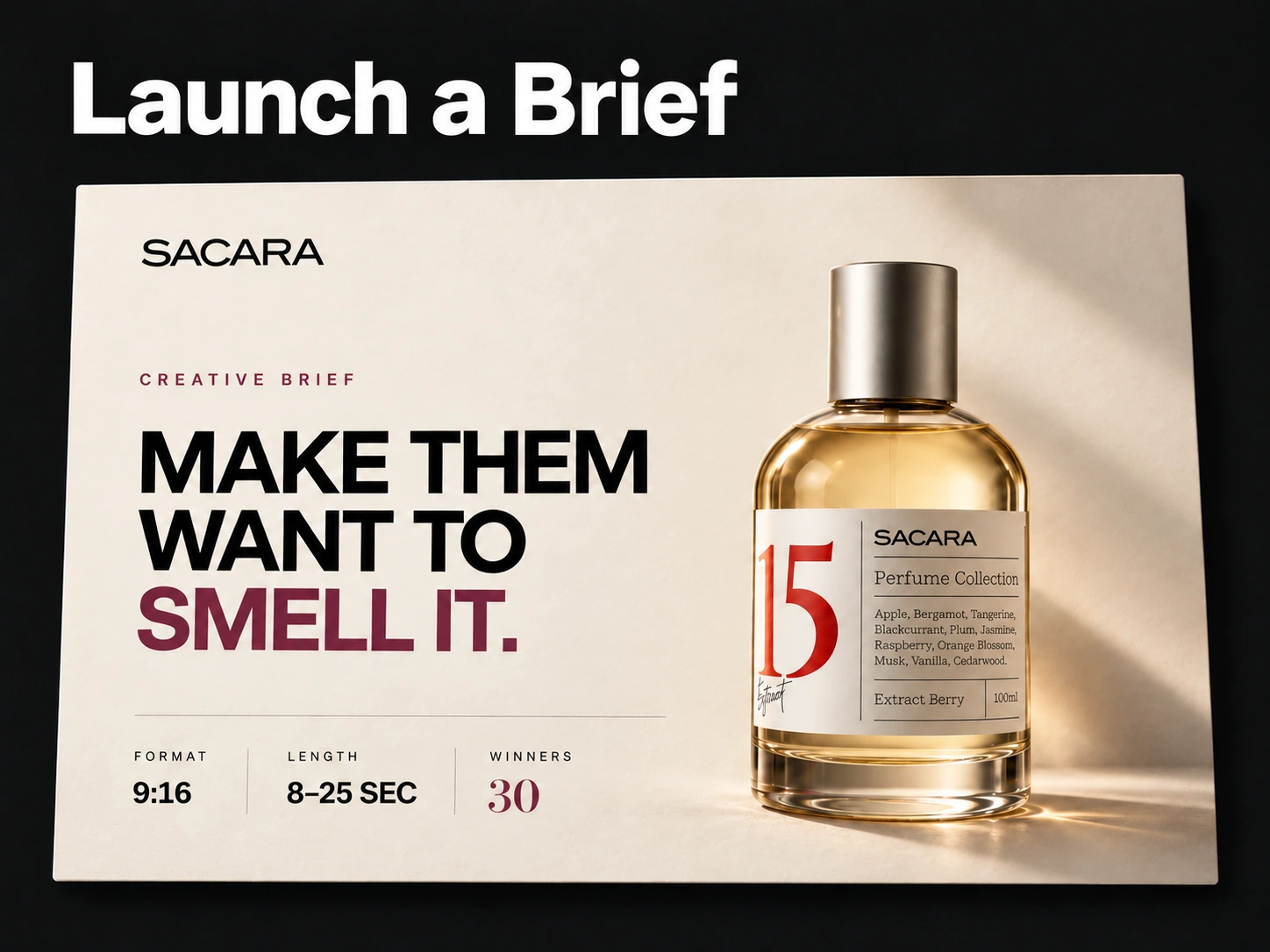
| Open competition | 30–200+ | Fixed campaign price | Before spend |
Testing three edits of the same idea is not testing. It is checking your prediction against itself.
Why head-to-head judging, not scores
Once you have thirty finished ads, the problem becomes selection — and selection methods are not equal.
Absolute scoring ("rate this ad 1–10") is notoriously unstable. Scores drift with mood, order, and fatigue. Pairwise comparison ("which of these two is the better ad for this brand?") is far more reliable, because humans are calibrated for relative judgments.
That is why entries get ranked through head-to-head battles rather than a spreadsheet of 1–10 scores. The disagreement patterns are informative in themselves — we wrote up what we found, and separately what actually predicts winning across 694 submissions.
What "choice" gives you that a prediction never can
- A distribution, not a point estimate. You see the range of interpretations your brief produces. That alone tells you whether your positioning is legible.
- Unexpected hooks. The winning angle is frequently one nobody in the brand team would have briefed. This is the single most cited surprise from brands running their first competition.
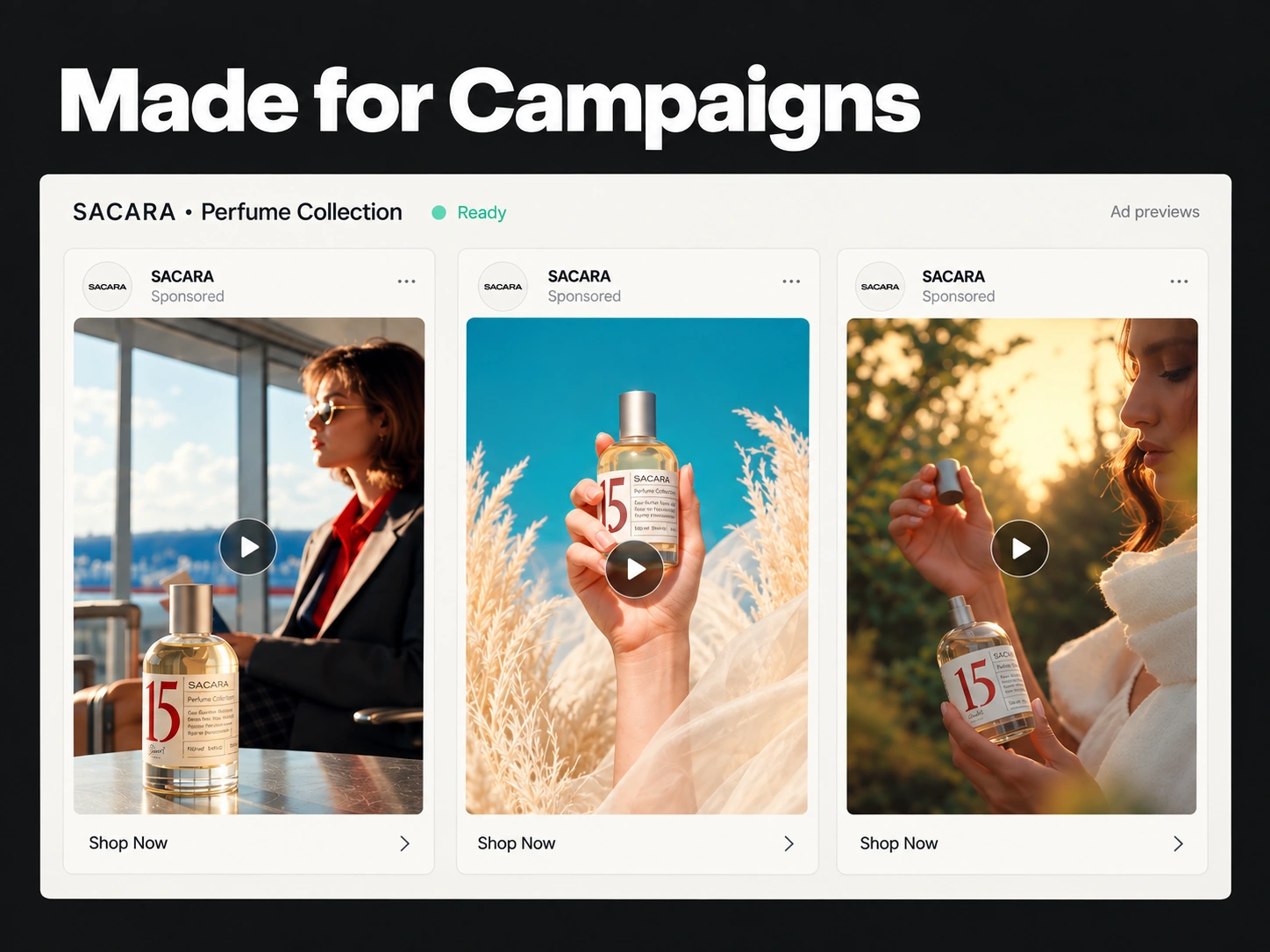
- A creative library, not one asset. The non-winning entries are still usable inventory for refresh cycles.
- Fatigue insurance. When your top ad burns out in three weeks, the replacement already exists.
Where the model genuinely breaks down
An honest list:
- Brand-safety-heavy categories. Regulated verticals need constrained creator pools and hard compliance gates, which reduces the variance the model depends on.
- Very narrow niches. If the product needs deep domain fluency, a large open pool produces a lot of confidently wrong work.
- Weak briefs. Competition amplifies brief quality in both directions. Vague brief, thirty vague ads.
- Organizations that cannot decide. The model relocates the hard part from production to selection. If your approval process cannot pick a winner in five days, you will not get the benefit.
The practical takeaway
Stop asking "what should our next ad be?" and start asking "how do we see thirty finished versions of our next ad before we spend a dollar on media?"
That is a procurement question, not a creative one — and it has a straightforward answer now.
FAQ
Isn''t this just A/B testing? No. A/B testing chooses between variants you already committed to producing, usually with live media spend. Competition generates the variants themselves, from independent creators, before spend.
Doesn''t volume dilute quality? Only without a ranking layer. Volume plus reliable head-to-head judging concentrates quality; volume alone just makes a bigger pile.
How many finished ads do I actually need? Meaningful choice starts around 20–30 finished ads per brief. Below that, you are still mostly sampling one interpretation.
Related reading: The 99designs model applied to AI video ads · Crowdsourced ad platforms in 2026 · 84 finished ads for the price of one agency video
Tal Dahabani
Founder & CEO at AdArena
Tal is the founder of AdArena who believes in performance over ego. He built AdArena because he saw how the traditional agency model was broken — brands spending fortunes on content they couldn't test. His mission: help brands discover what actually works, faster than their competitors.
You Might Also Like

How to Use Seedance 2.5 for Real Ads: The Winning-Ad Workflow
A production workflow that turns Seedance 2.5 clips into ads that lower CPA — brief first, concepts second, generation third, testing last.

How to Find Your Winning Ad Before You Spend a Dollar on Media
Most brands discover their winning ad by burning media budget on losing ones. Here is the alternative: find the ad first, then spend behind it.

Creative Fatigue Is Killing Your ROAS. Here's the 2026 Fix.
Your ads did not stop working because the algorithm changed. They stopped working because your audience finished watching them. Here is how to fix it structurally.
Get Weekly Video Marketing Insights
Join 2,000+ marketers who get our best strategies, case studies, and AI tips every week.
No spam, ever. Unsubscribe anytime.